
บทเรียนภาษาอังกฤษ อาหารญี่ปุ่นในไทย
English Conversation: Japanese Food in Thailand
Pim: Hey John, are you hungry? Do you want to grab some dinner? (เฮ้ จอห์น หิวไหม ไปหาอะไรกินมื้อเย็นกันไหม)
John: Sure! What do you have in mind? (ได้เลย คุณคิดไว้หรือยังว่าอยากกินอะไร)
Pim: How about Japanese food? There are so many good restaurants in Bangkok. (อาหารญี่ปุ่นเป็นไง มีร้านอร่อยๆ เยอะมากเลยในกรุงเทพฯ)
John: That sounds great. Japanese food is really popular here, isn’t it? (ฟังดูดีนะ อาหารญี่ปุ่นที่นี่เป็นที่นิยมมากเลยใช่ไหม)
Pim: Definitely. You can find everything from high-end omakase to affordable ramen shops. (แน่นอน มีตั้งแต่โอมากาเสะระดับหรูไปจนถึงร้านราเมนราคาย่อมเยาเลยล่ะ)
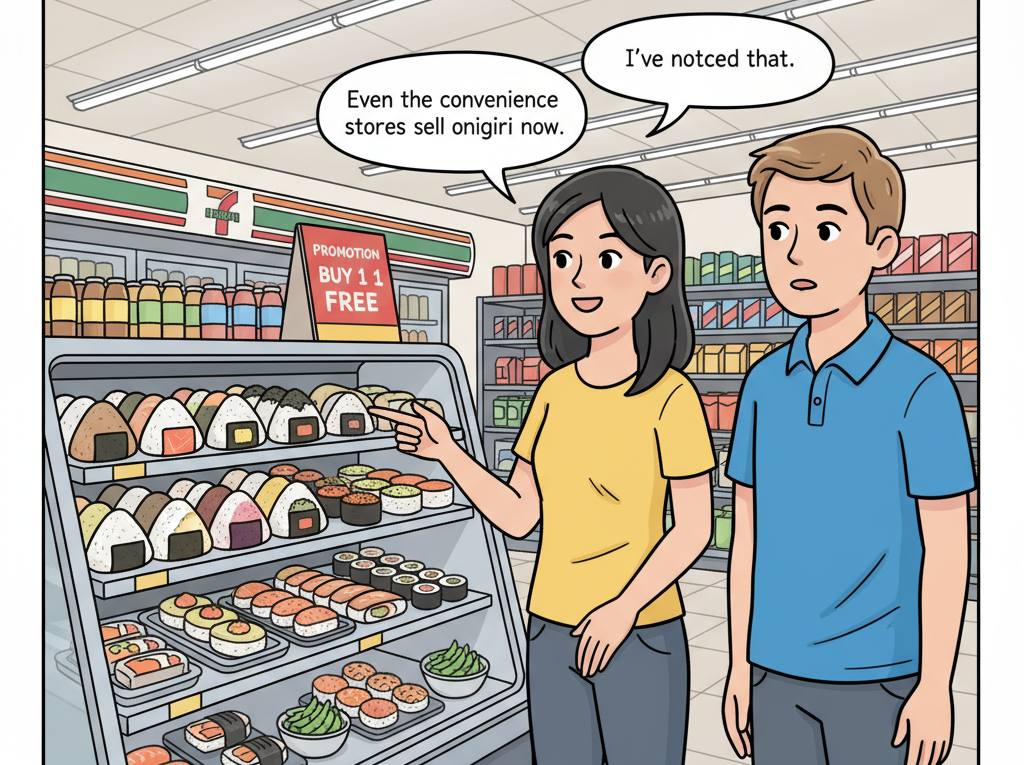
John: I’ve noticed that. Even the convenience stores sell onigiri now. (ผมก็สังเกตเห็นนะ แม้แต่ร้านสะดวกซื้อเดี๋ยวนี้ก็มีโอนิกิริขาย)
Pim: True. I personally love Salmon Sashimi. Let’s go to the mall; they have plenty of options. (จริง ฉันส่วนตัวชอบแซลมอนซาชิมิมาก ไปห้างกันเถอะ ที่นั่นมีตัวเลือกเยอะแยะเลย)
John: Deal! Let’s go. (ตกลง ไปกันเลย)
Grammar Points (ไวยากรณ์จากบทสนทนา)
- How about + [Noun/Gerund]?
ใช้ในการเสนอไอเดียหรือถามความคิดเห็น
- ตัวอย่าง: How about Japanese food? (อาหารญี่ปุ่นเป็นอย่างไรบ้าง?)
- ตัวอย่าง: How about going to the mall? (ไปห้างกันดีไหม?)
- There is / There are (แปลว่า “มี”)
ใช้บอกว่ามีสิ่งใดดำรงอยู่ (ไม่ใช่ “มี” แบบเป็นเจ้าของ)
- There are + นามพหูพจน์: There are so many good restaurants. (มีร้านอาหารดีๆ เยอะมาก)
- There is + นามเอกพจน์: There is a ramen shop nearby. (มีร้านราเมนอยู่ใกล้ๆ แห่งหนึ่ง)
- Adjective Placement (การวางคำคุณศัพท์)
ในภาษาอังกฤษ คำคุณศัพท์จะวางไว้หน้าคำนามที่มันขยาย
- High-end omakase (โอมากาเสะระดับหรู)
- Affordable ramen (ราเมนราคาประหยัด)
Key Vocabulary (คำศัพท์หลักที่นำไปใช้ได้จริง)
- Grab (v.): ไปหาอะไรกิน (แบบเร็วๆ หรือไม่เป็นทางการ)
- Example: Let’s grab a coffee. (ไปหาประทานกาแฟกันเถอะ)
- Have in mind (idiom): คิดไว้ในใจ, มีแผนไว้
- Example: Do you have any place in mind? (คุณมีสถานที่ที่คิดไว้ในใจไหม?)
- Popular (adj.): เป็นที่นิยม
- Example: This sushi bar is very popular. (ซูชิบาร์แห่งนี้ได้รับความนิยมมาก)
- High-end (adj.): ระดับพรีเมียม, หรูหรา, ราคาสูง
- Example: We went to a high-end restaurant last night. (เมื่อคืนเราไปร้านอาหารหรูมา)
- Affordable (adj.): ราคาที่จ่ายไหว, ไม่แพงจนเกินไป
- Example: The food here is tasty and affordable. (อาหารที่นี่อร่อยและราคาไม่แพง)
- Plenty of (adj./det.): มากมาย, จำนวนมาก
- Example: There are plenty of choices on the menu. (มีตัวเลือกมากมายในเมนู)
- Convenience store (n.): ร้านสะดวกซื้อ (เช่น เซเว่นฯ)